Pine
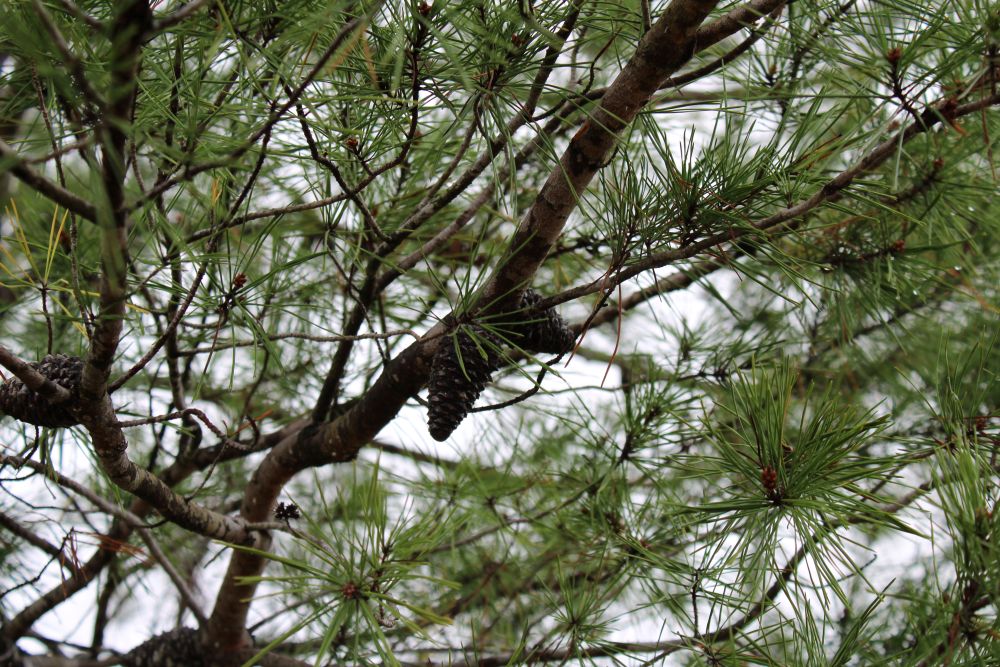
I grew up in Northern New England and have always had a special love of pine trees. The only tree I knew how to climb in my childhood backyard was a white pine with a dead branch low enough for me to pull myself up so that I could climb to higher branches. I had a special branch that I could sit on to look out over our pond, and I vaguely recall having a few trinkets stashed up there. Because of that carefree, high-up feeling, I place pine in the East with Air and the spring equinox in my personal table of correspondences, although I will also talk below about associations with Fire. My inner world is very tactile, and I can easily recall the feeling of that sticky pine resin on my hand, a pact between myself and something ancient. As I started learning botany as an adult, this pact developed into a fascination with non-flowering plants.
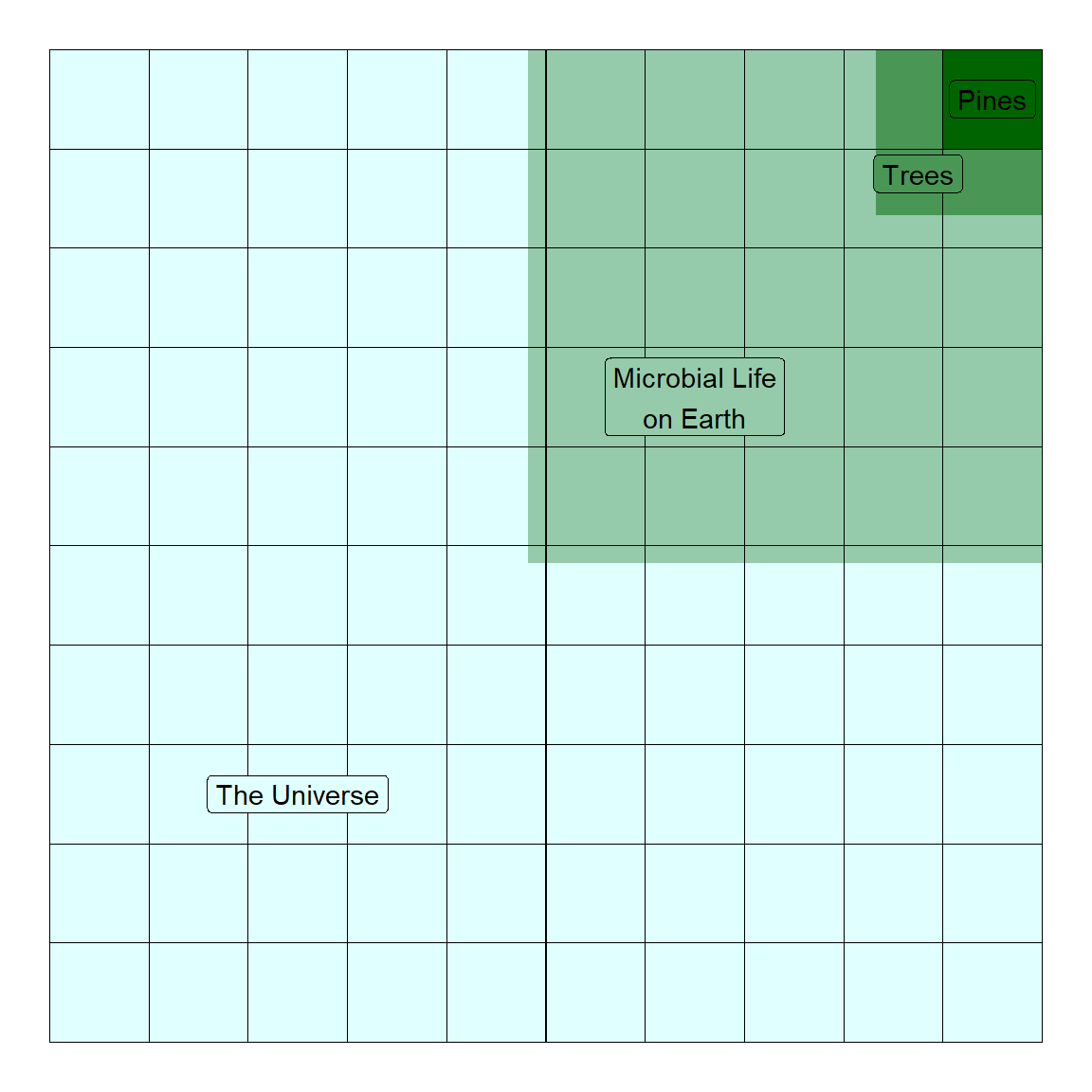
Pines are indeed ancient; the oldest fossil dates to 140 million years ago. Given that the universe is estimated to be 13.8 billion years old, pine trees have existed for almost exactly 1% of the age of the Universe. Various educational entertainers love to remind us that human civilization is a nearly imperceptible blip in the history of the Universe, making it easy to forget that life itself is not a blip. There has been microbial life on Earth just about as long as Earth has had oceans, more than a quarter of the age of the Universe. Pines, along with many other plants and animals that we would recognize, have existed for a fraction of that time that is comprehensible to our little human minds.
Pines, the genus Pinus, are a type of conifer, and all conifers are gymnosperms (meaning “naked seed”), which includes all plants that make seeds but not flowers. The easiest way to tell for sure that a tree is a pine is if it has two or more needles emerging from a single sheath (called a fascicle). Pines are in the Pinaceae family, along with spruces, firs, larches, and hemlocks. The other large conifer family is the Cupressaceae, which includes cypresses, junipers (including red cedar), white cedar, and redwoods; these diverged from pine very early in the evolution of conifers. Yew is in a different family but more closely related to the Cupressaceae than it is to the Pinaceae. A conifer cone is different from a flower in that it has an indeterminate number of identical scales that produce pollen or seeds, whereas in flowering plants those scales have specialized into distinct organs (sepals, petals, stamens, and carpels) and most plant species have a predetermined number of each organ on each flower. I won’t go into the details, but the fertilization of a seed by pollen is different between gymnosperms and flowering plants (angiosperms), and the vasculature for transporting water and nutrients is also pretty different.
Pine is one of the options for the letter ᚐ (A; Ailm or Pion) in the ogham alphabet, and in this context is associated with far sight and clarity. The Silver Elves associate pine with leading by example and helping others to find their spiritual purpose (The Silver Elves 2019). The Seminoles and Choctaw considered the tips of the branches to have the best medicine, and would crush and boil four pieces, representing the four directions as a “reverential request for the aid of the spirits”, together with dog fennel, to make a liquid to clean sores (Austin 2004). I have found Florida Ethnobotany (Austin 2004) to be tremendously useful not just for the uses of plants but also for the names of plants, and at the risk of cultural appropriation from a people who had to flee from Georgia to Florida to escape enslavement, it feels right to me to chant the Muskogee word cule when I am meditating with pine trees.
Sand pines
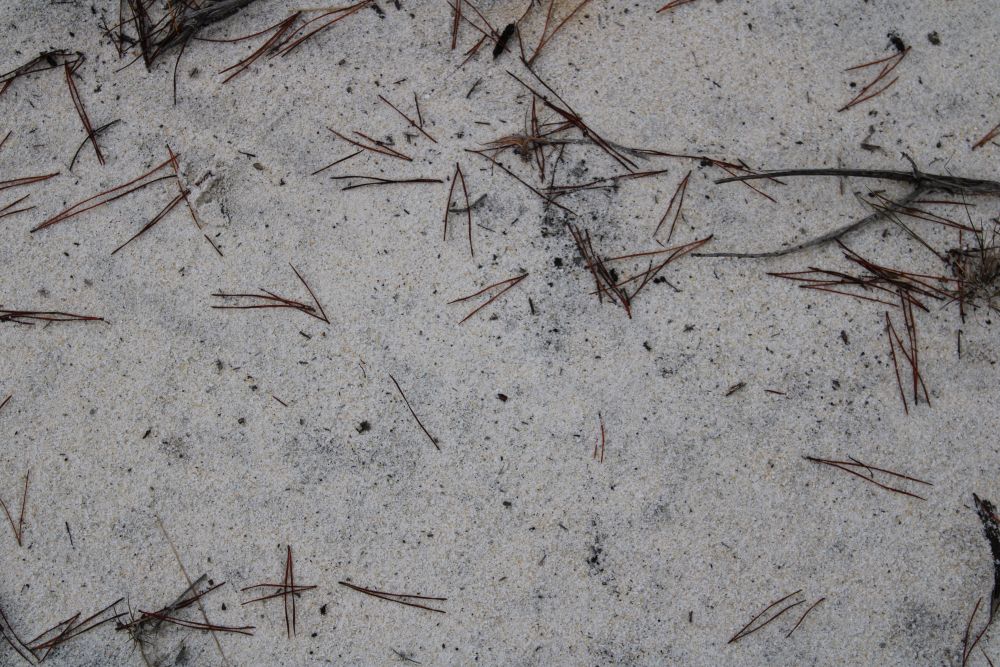
In my druidry studies over the past few months, it has come into my perception that every plant has a space within it, really an entire universe. Sometimes all I can remember from a dream is the shape of the space that I was in and how I was oriented in it, so it stands to reason that spatial orientation is a way that I could connect with the natural-magical world. This realization was almost too much; a simple walk down that road becomes a passage through a narrow hallway within an endless labyrinth. But it is the sand pines that are inviting me in. There is one that is especially friendly to me, especially since I learned that casting a circle around it was inappropriate. I am sometimes allowed into its inner space to have a dark, wordless experience.
Florida was a chain of islands before it was a peninsula, and as a result we have ancient sand dunes running down the middle of the state, forming the Florida scrub, the natural habitat of sand pines (P. clausa). The soil is essentially beach sand and retains water very poorly, so all the plants that grow there are very drought tolerant and form wide, shallow mats of roots to capture rainwater as it falls. This lack of a deep taproot is why sand pines are so often seen learning over. They do, however, connect their roots to each other, which helps them to avoid getting blown over in hurricanes (Whitney, Means, and Rudloe 2004).
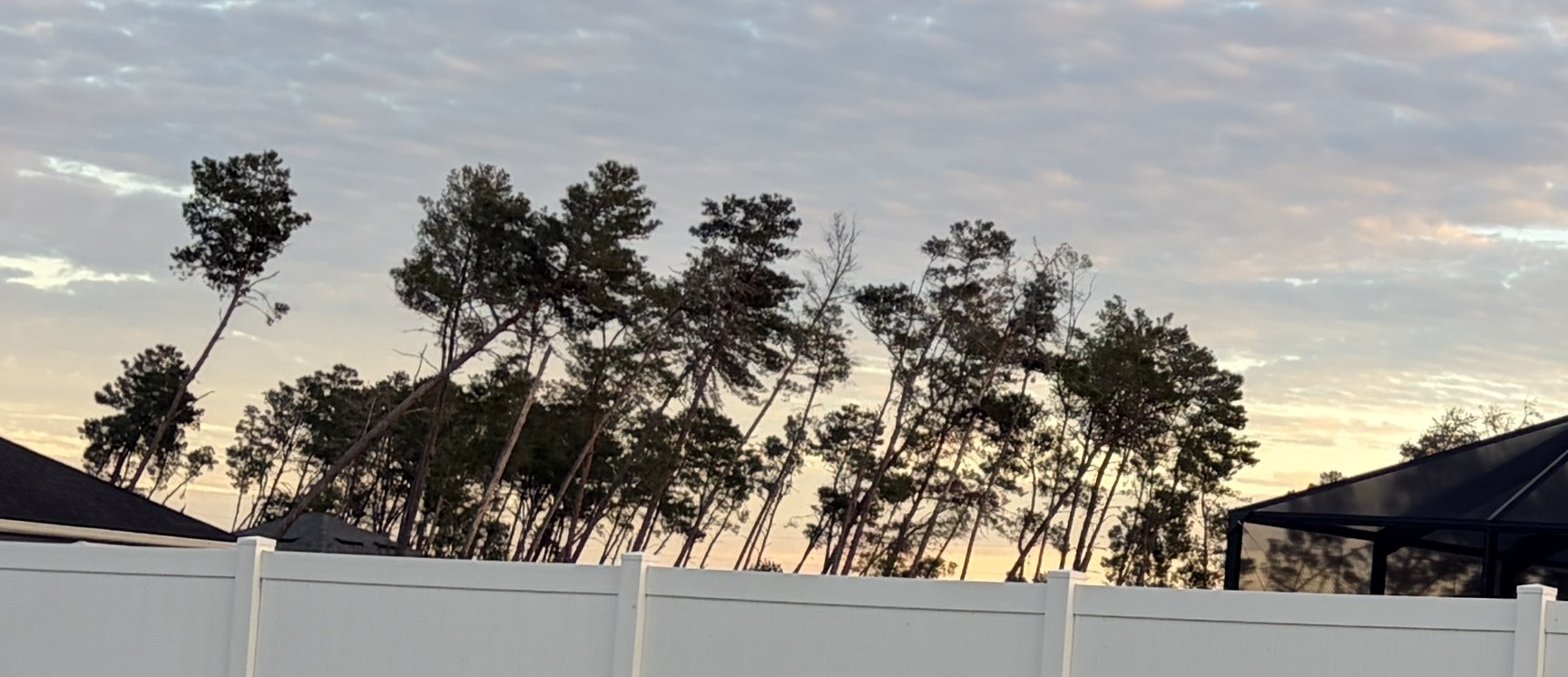
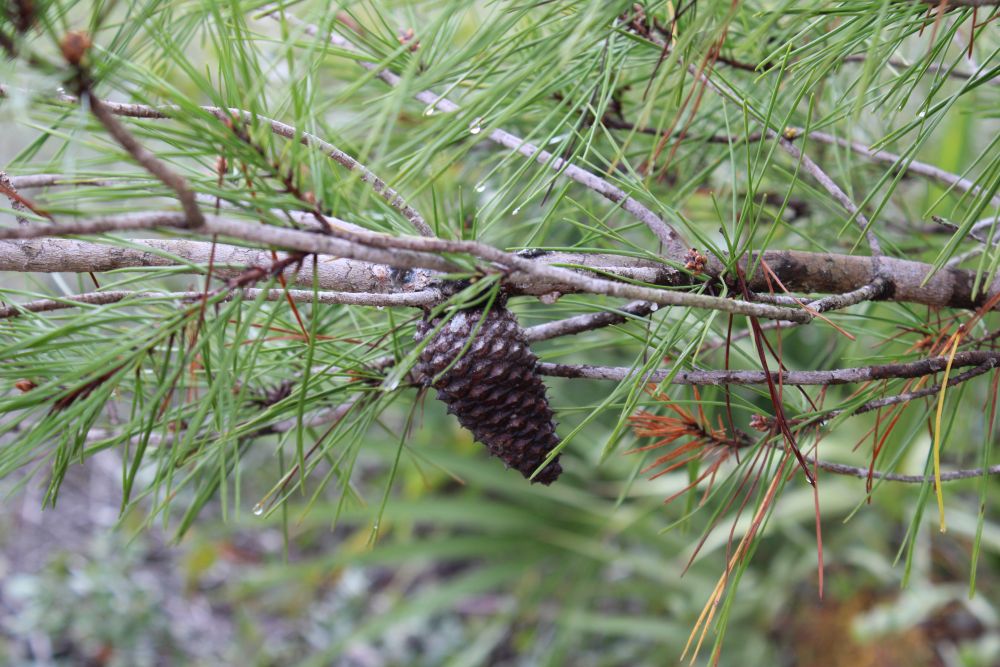
From the scrub, you may only need to walk a mile or two to be in a different habitat with slightly richer soil. The sand live oaks, myrtle oaks, and Chapman’s oaks (Quercus geminata, Q. myrtifolia, Q. chapmanii) of the scrub give way to the turkey oaks and post oaks (Q. laevis, Q. stellata) of the forest. And you will also see the sand pines be replaced with slash pines (P. elliottii) and longleaf pines (P. palustris). You can tell them apart because sand pines have much shorter needles and smaller cones than slash or longleaf pines. Slash pines and longleaf pines also form taproots that keep them standing upright, unlike sand pines (Whitney, Means, and Rudloe 2004).
Fire is important to the life cycle and ecology of all the pines in my area, but in very different ways. Longleaf and slash pines evolved to survive relatively cool, low-to-the-ground wildfires annually in the late spring. Their fallen needles serve as fuel that spreads these fires, killing hardwoods while the pines survive for hundreds of years. (Longleaf pine is hugely important to the ecology of the Southeast US and probably merits it own blog post.) The scrub, on the other hand, doesn’t have annual mild wildfires, but instead has catastrophic wildfires every 30-50 years. A sand pine will go up like a torch in one of these fires, and die. However, the fire causes the cones of the sand pine to open so that new seedlings can start. For this reason, stands of sand pine are often all the same age (Whitney, Means, and Rudloe 2004).
I think this is why sand pines seem spiritually approachable to me, while other pines remain somewhat aloof. I probably don’t seem very interesting to a longleaf pine that could live for 500 years. But the short reproductive and life cycle of the sand pine is much closer to what I have as a human. We are operating on a similar time scale, and perhaps that makes communication easier.
I have also noticed on my walks the energy of some sand pines seeming thinner than others, but not in a bad way. These “thin” trees don’t have needles packed in quite as densely, but have a lot of cones. I think it is that the energy of these trees is stretching forward into the next generation through their seeds. As I raise a child while also doing some ancestor work as part of my druidry studies, perhaps I find that common ground with the tree.
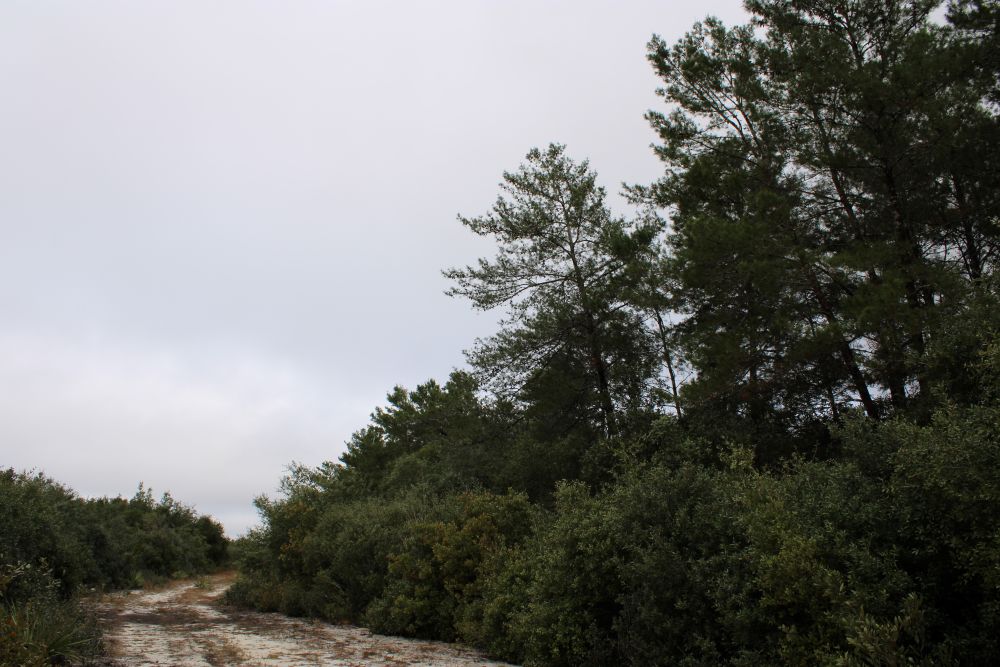
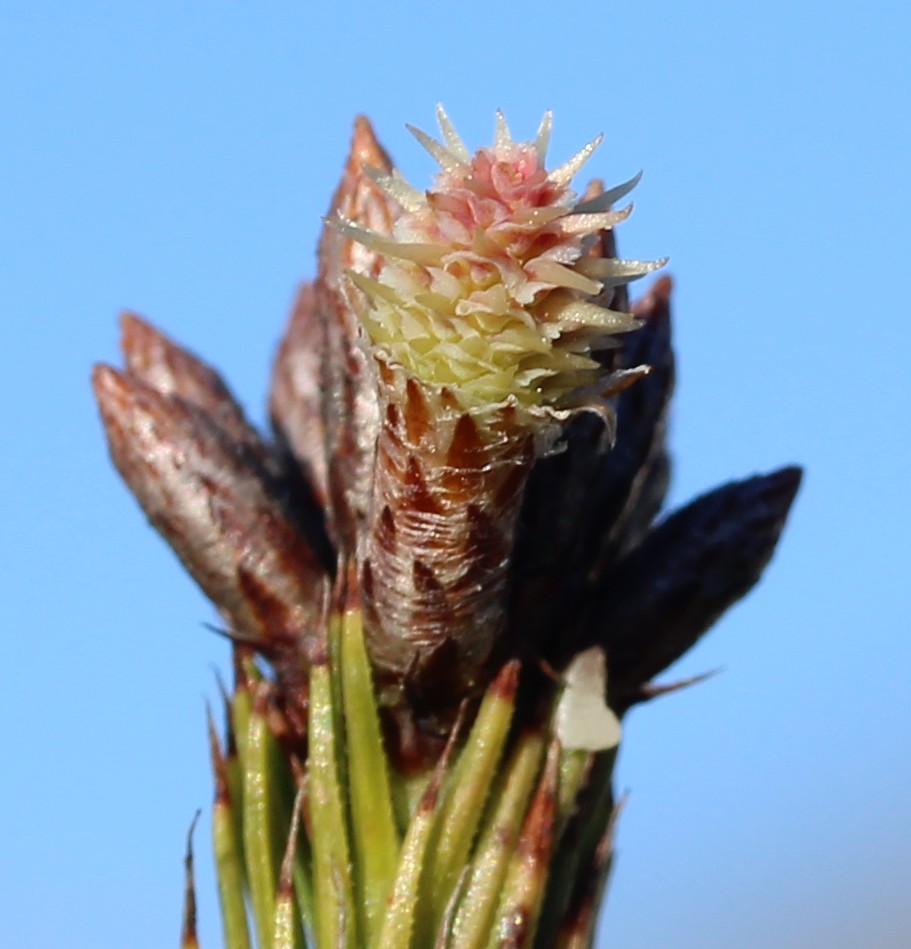
A hike on the Yearling Trail in November
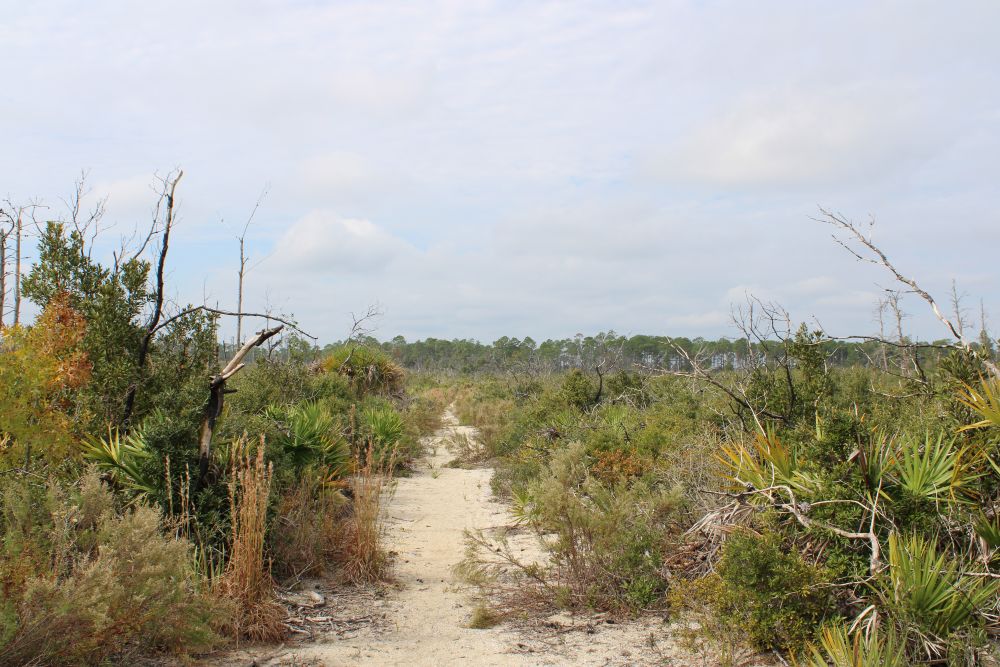
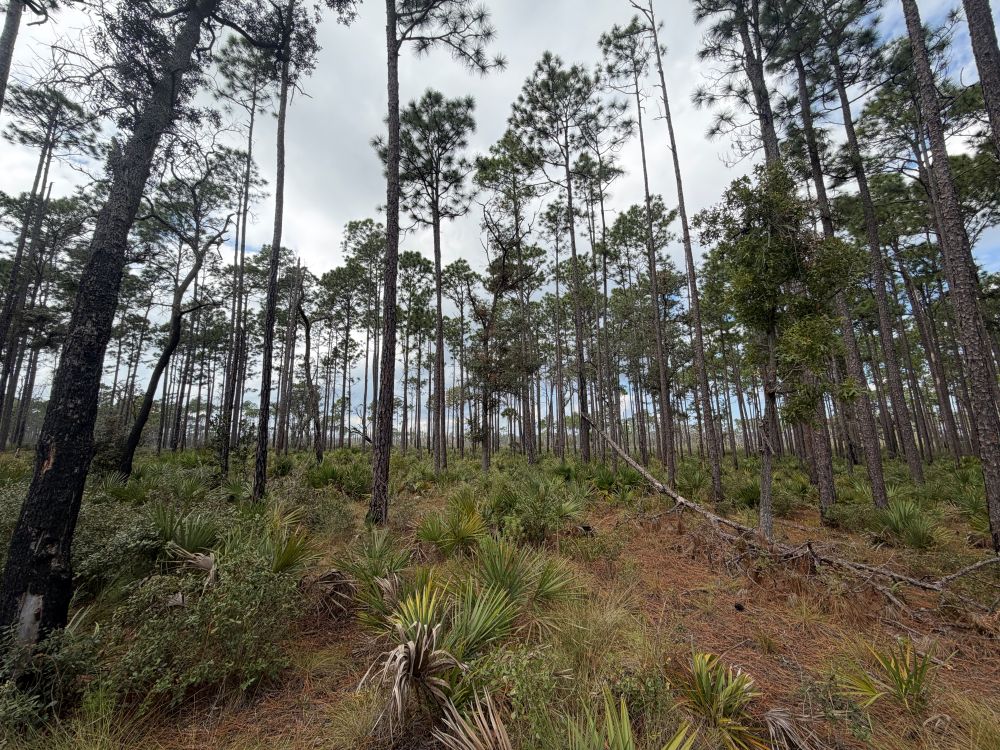
Since the scrub near my house is maintained by periodic bulldozing rather than fire (it sounds bad, but it makes a habitat for threatened species without endangering the neighborhood) I took a drive out to the Ocala National Forest to see what a more natural scrub looks like and experience the natural life cycle of sand pines. I went to the Yearling Trail (named for the famous novel/movie that took place there), which begins in the scrub and then transitions abruptly to a pine grassland. I didn’t stop and meditate there, wanting to take my photos and then get a good hike in before either my middle-aged body gave out or I became late to pick my kid up from school. And yet, it reminded me of dreams I have had of hiking in places where the landscape suddenly changes, and after a few hours there I felt that the space was firmly lodged in my subconscious.
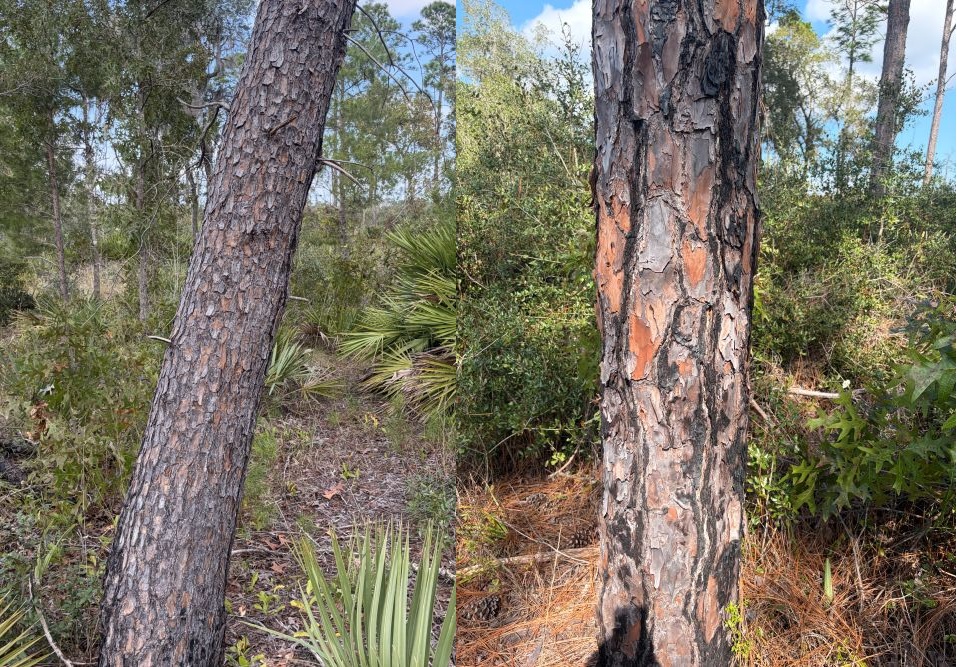
It was also a chance to get up close with sand pine, longleaf pine, and slash pine all in one place. The photo below compares the trunk of a sand pine (leaning, of course) to the trunk of a longleaf pine of similar size. The bark of the longleaf pine has very large flakes compared to that of the sand pine, and you can see that they are charred by fire although the tree is alive and well. I read that the flakes of longleaf pine bark simply fall off if they catch fire, protecting the trunk from burning (Whitney, Means, and Rudloe 2004).
Three and a half years ago there was a wildfire in this area, so the scrub is early in its 30-50 year life cycle of destruction and regrowth. There were plenty of oak bushes and saw palmettos that had regrown from their underground parts, along with grasses and various Asteraceae. But most of the sand pines in the scrub were dead, broken trunks, their bark fallen off. Among the charred remains of trees that had fallen to the ground, I found some very young seedlings growing from the seeds that had been released by the fire.
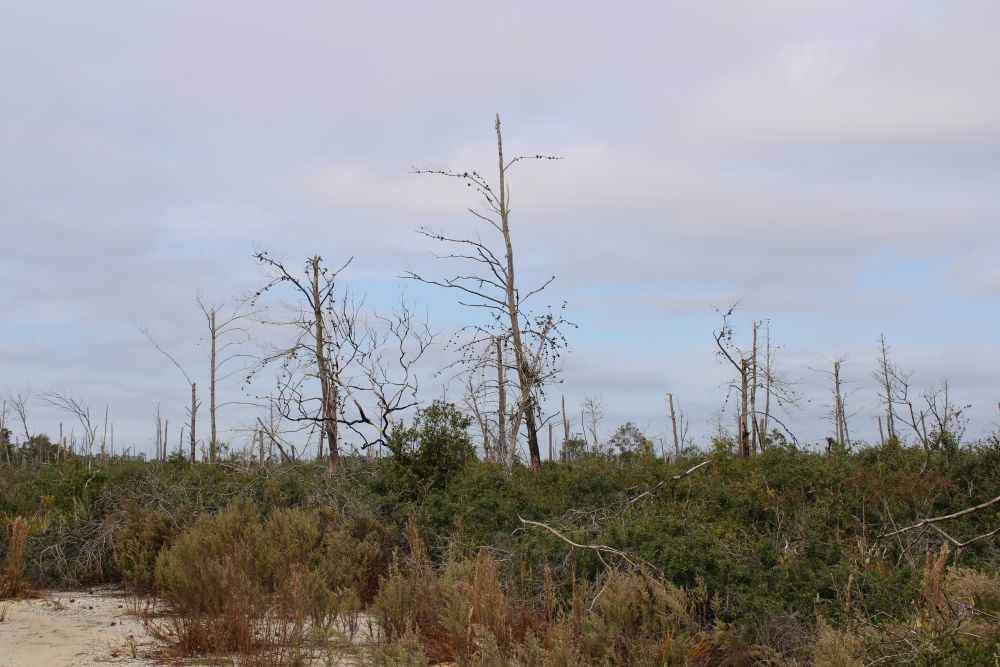
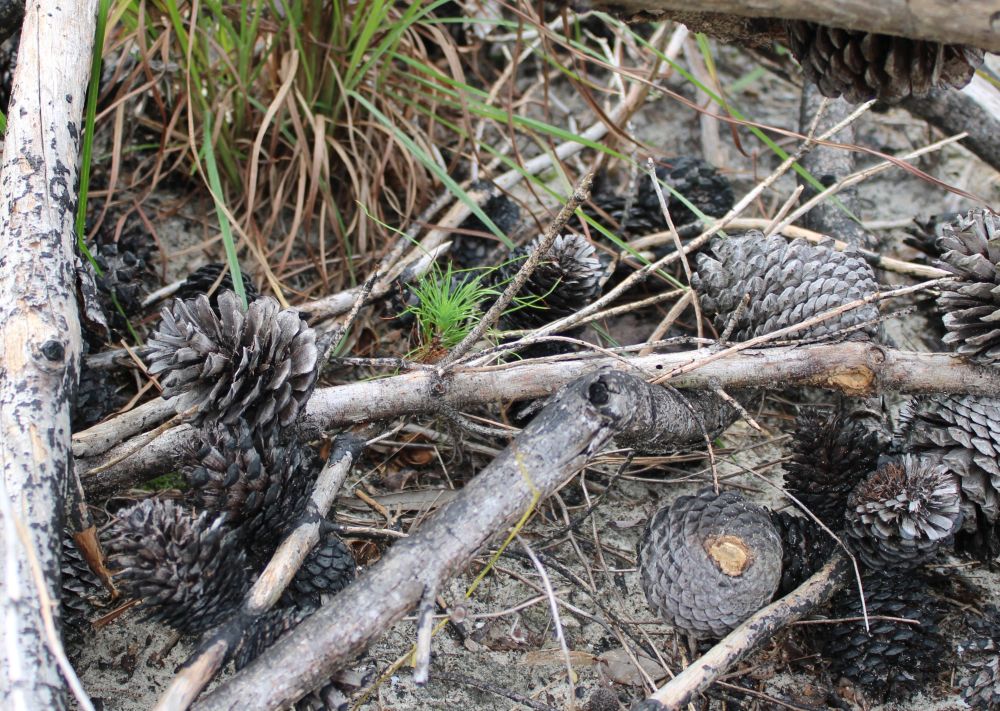
My hike was also a chance to see two animals that are endemic to the Florida scrub (meaning they don’t live anywhere else in the world, the Florida scrub jay (Aphelocoma coerulescens) and the Florida scrub lizard (Sceloporus woodi). Both are very dependent on the habitat created by the fire, with patches of sand for hunting, and in the case of the jay, caching acorns (Hines 2023).
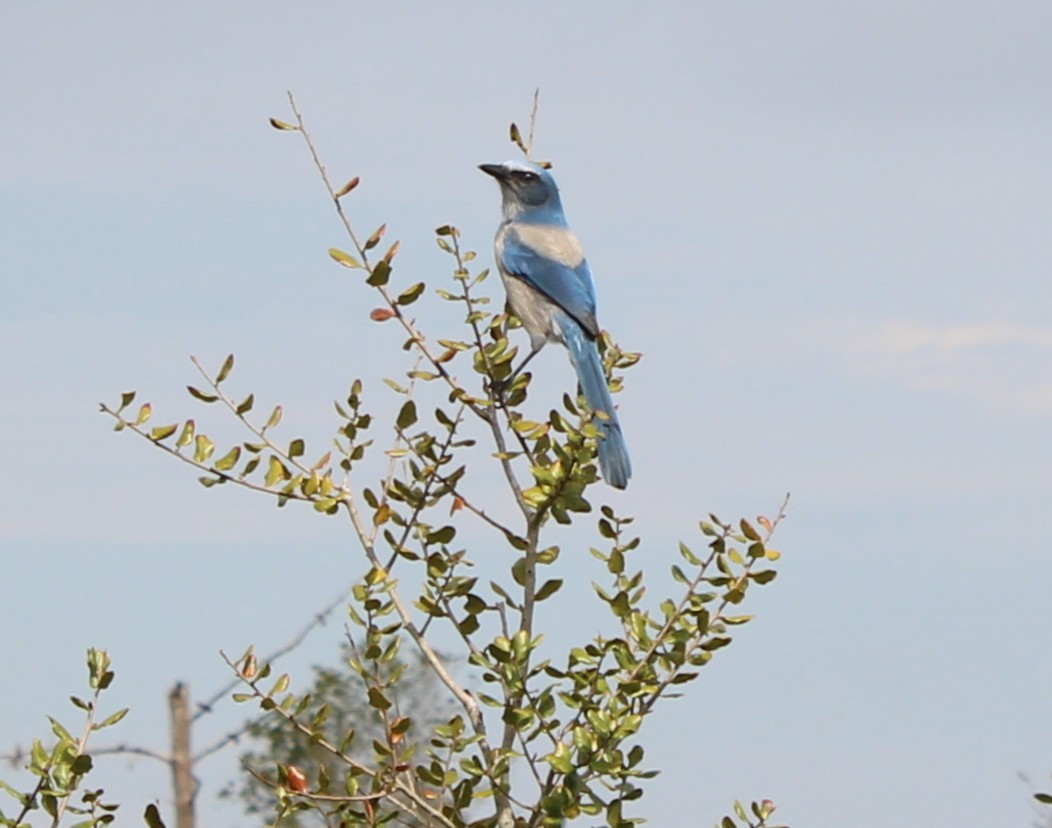
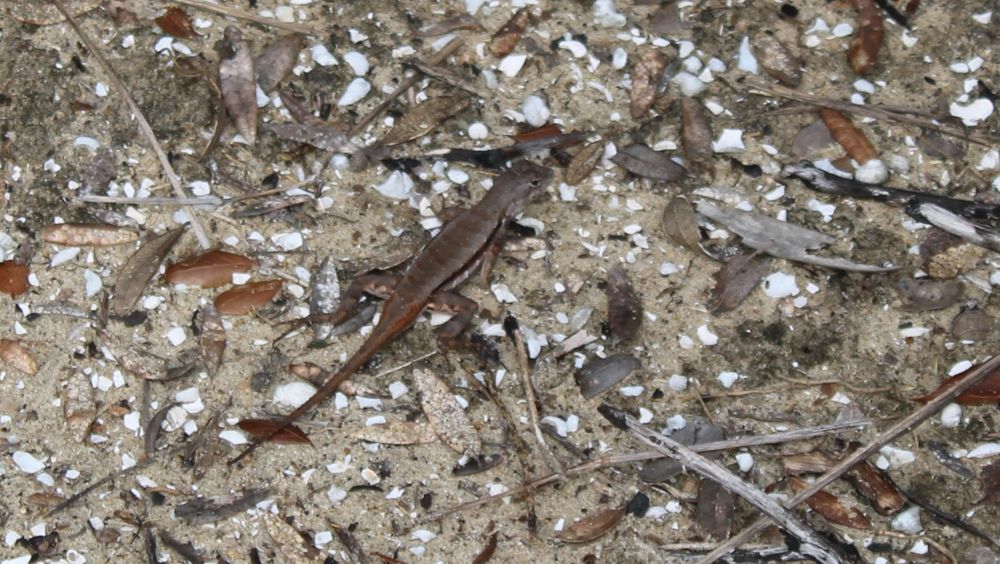
Lastly, here are my photos of the slash and longleaf pines Pat’s Island, off in the distance and up close. It was a dreamy landscape, and hard to believe that settlers once lived and farmed there.
References
Austin, Daniel F. 2004. “Pinus.” In Florida Ethnobotany. CRC Press.
Hines, Kirsten. 2023. Wild Florida: An Animal Odyssey. University Press of Florida.
The Silver Elves. 2019. “Pine.” In An Elfin Book of Trees for the Elven Druid: The Ogham of the Elves Using Elvish Wizard Script. Amazon Kindle Direct.
Whitney, Ellie, Bruce D. Means, and Anne Rudloe. 2004. Priceless Florida: Natural Ecosystems and Native Species. Pineapple Press.
Reuse
CC-BY